Wastewater Sector
- Advanced Membrane
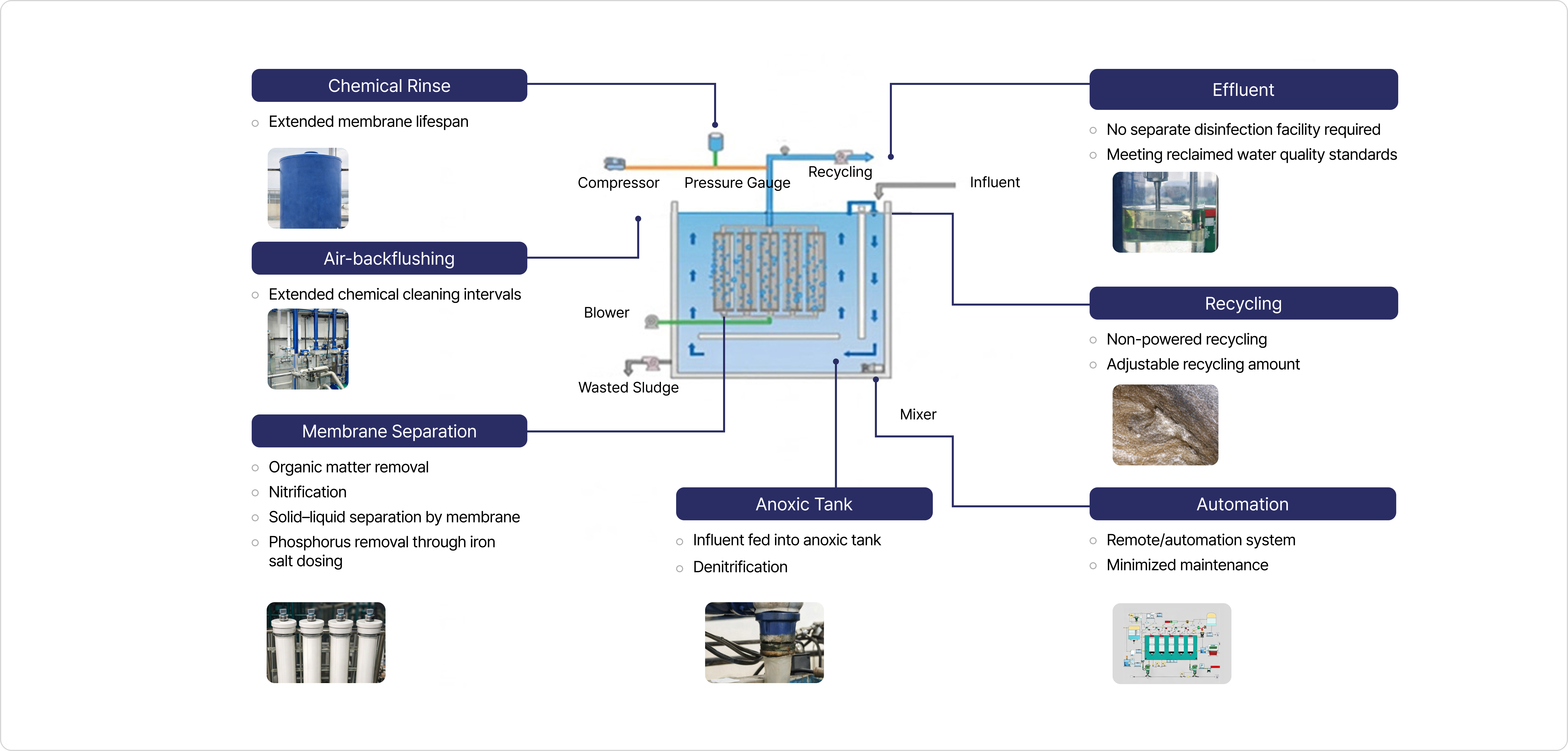
Process - This process utilizes a single reactor in which aerobic and anoxic zones for the removal of organic matter, nitrogen, and phosphorus are vertically arranged, enabling biological treatment through non-powered internal circulation driven by hydraulic flow. In addition, an immersed hollow-fiber membrane is installed in the aerobic tank, allowing for efficient solid–liquid separation and effective removal of coliform bacteria.
- Chemical Rinse
-
- Extended membrane lifespan
- Effluent
-
- No separate disinfection facility required
- Meeting reclaimed water quality standards
- Air-backflushing
-
- Extended chemical cleaning intervals
- Recycling
-
- Non-powered recycling
- Adjustable recycling amount
- Membrane Separation Tank
-
- Organic matter removal
- Nitrification
- Solid–liquid separation by membrane
- Phosphorus removal through iron salt dosing
- Anoxic Tank
-
- Influent fed into anoxic tank
- Denitrification
- Automation
-
- Remote/automation system
- Minimized maintenance
- Nitrogen & Phosphorus Removal Process
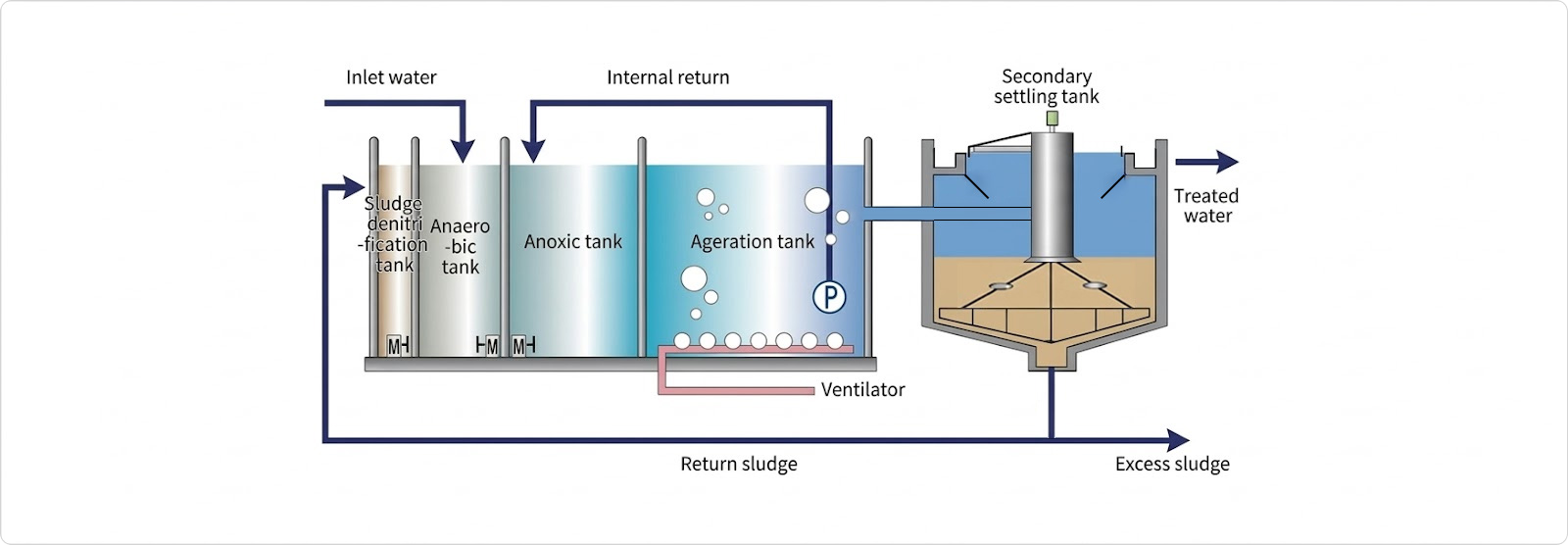
- This process enhances the conventional activated sludge process by incorporating sludge denitrification, anaerobic, and anoxic zones, enabling the simultaneous biological removal of nitrogen and phosphorus based on microbial activity. In the sludge denitrification tank, nitrate nitrogen contained in the return sludge is removed through endogenous denitrification, allowing for more efficient phosphorus removal.
- Crystallization System for Nitrogen & Phosphorus Recovery
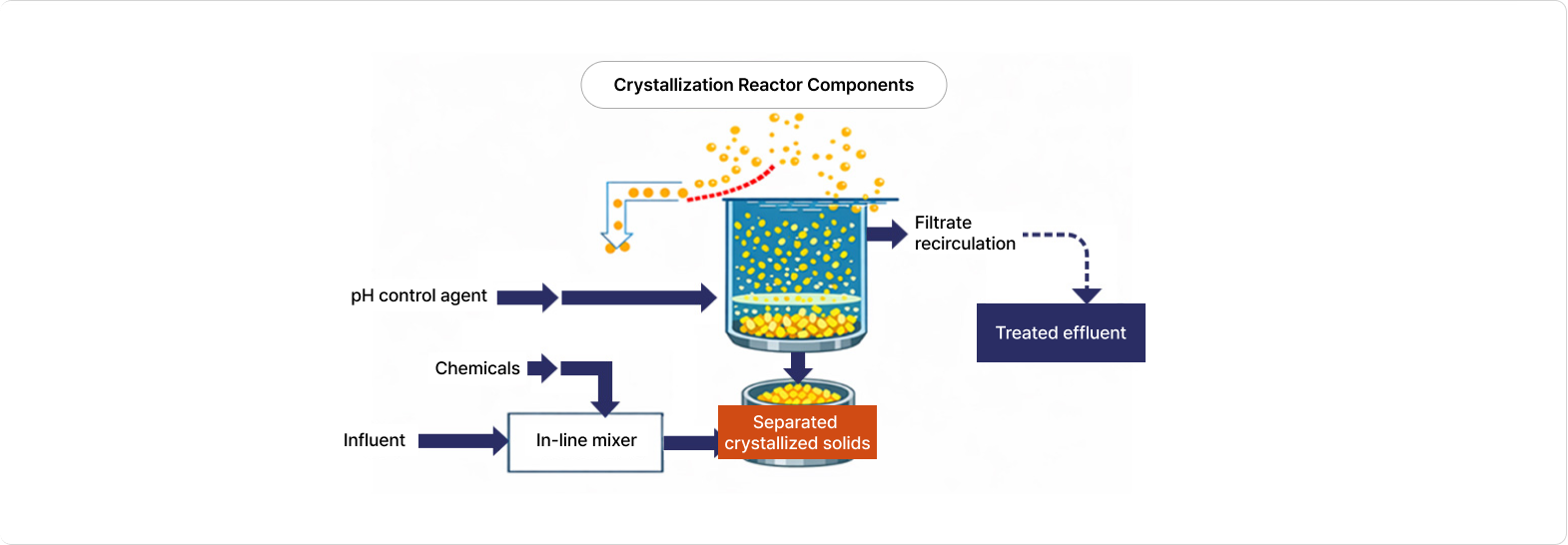
- This process applies an upflow crystallization method to effectively remove and recover dissolved phosphorus in wastewater, producing slow-release fertilizer. It can be applied to municipal and industrial wastewater treatment facilities, contributing to resource circulation through the removal and recovery of nitrogen and phosphorus.
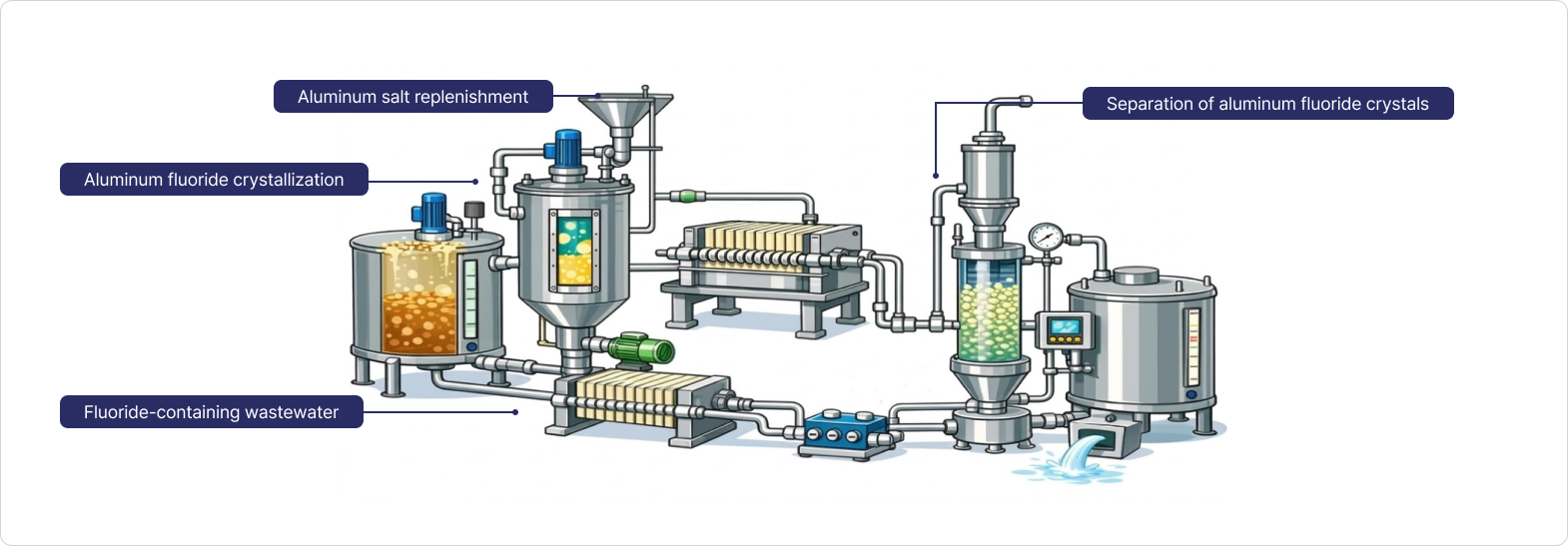
- Fluoride Removal Using Calcium Fluoride Granulation
-
This process efficiently removes fluoride from wastewater through aluminum fluoride
crystallization and calcium fluoride granulation.
Crystallization enhanced by ultrasonic treatment and cavitation induced by high-temperature conditions significantly improves the formation efficiency of aluminum fluoride crystals. As a result, the process achieves higher fluoride removal efficiency while reducing chemical consumption and operating costs compared to conventional methods.
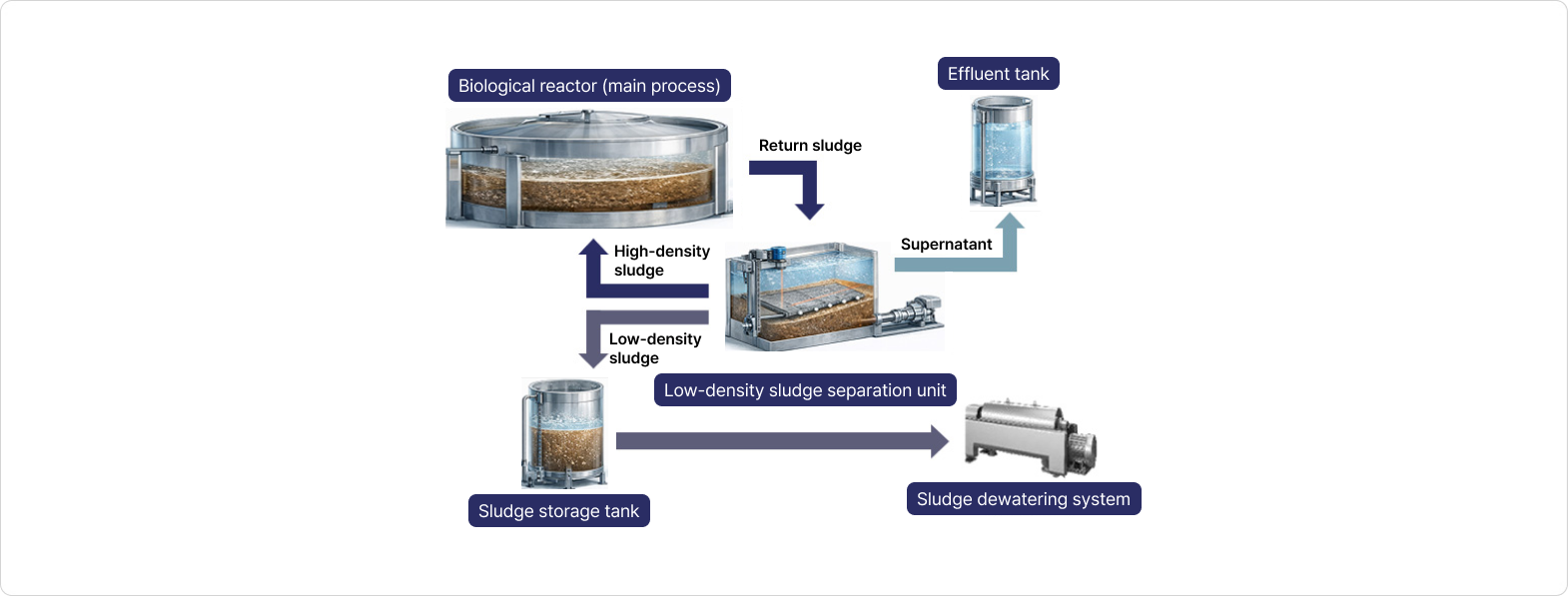
- Low-Density Sludge Separation System
- In biological reactors, return and discharged sludge from sedimentation tanks typically consist of high-density, highly active sludge, which can lead to the accumulation of low-density sludge within the system. This reduces overall biological activity. This technology addresses the issue by separating and discharging low-density sludge, thereby improving reactor performance and operational efficiency.